


Aesthetic fillings and ceramic inlays
- Tooth-coloured composite fillings
- Ceramic inlay / onlay
- e.max technology
When the best result is almost invisible
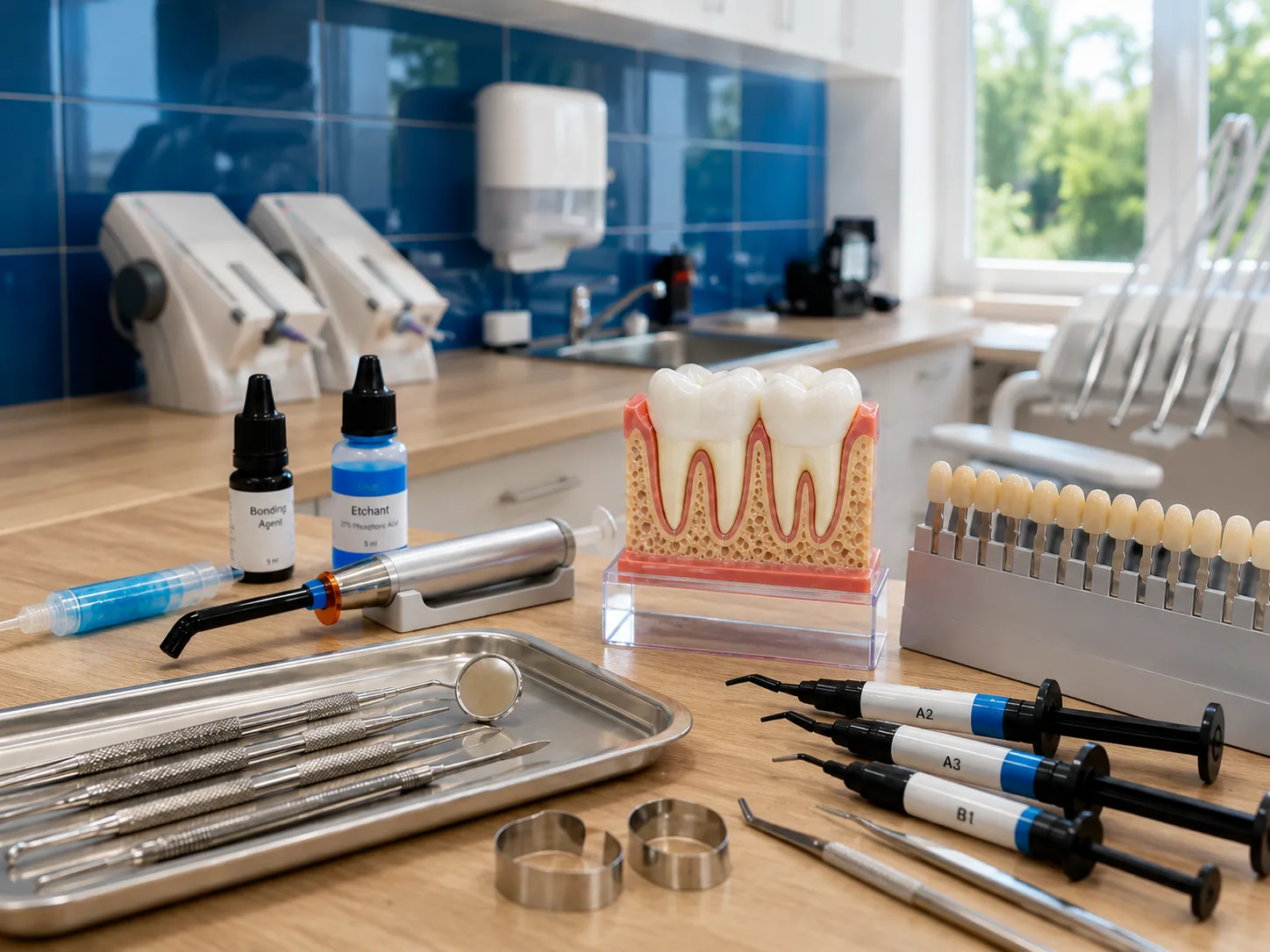
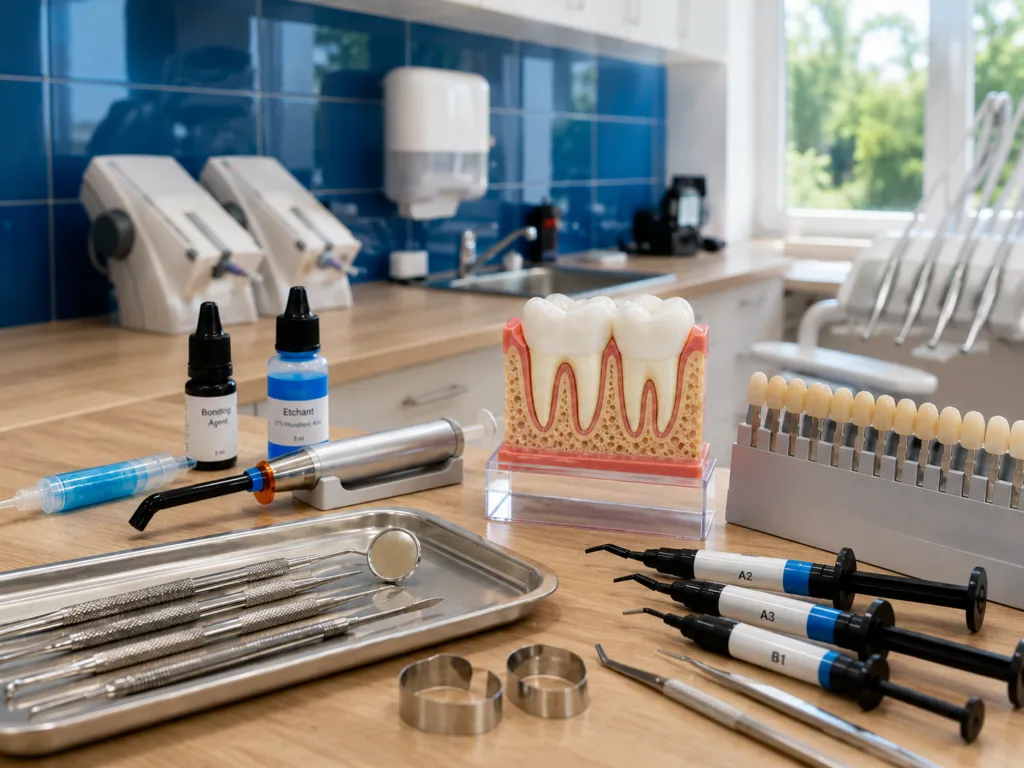
In modern dentistry, a filling is no longer simply “filling a hole.” Our goal is to restore a damaged or decayed tooth so that in function, shape, and appearance it comes as close as possible to its original, natural state. With advanced aesthetic fillings we do more than replace the missing part of the tooth – we rebuild its anatomical form, grooves, contact points, and natural shade variations as well.
Why we no longer use amalgam
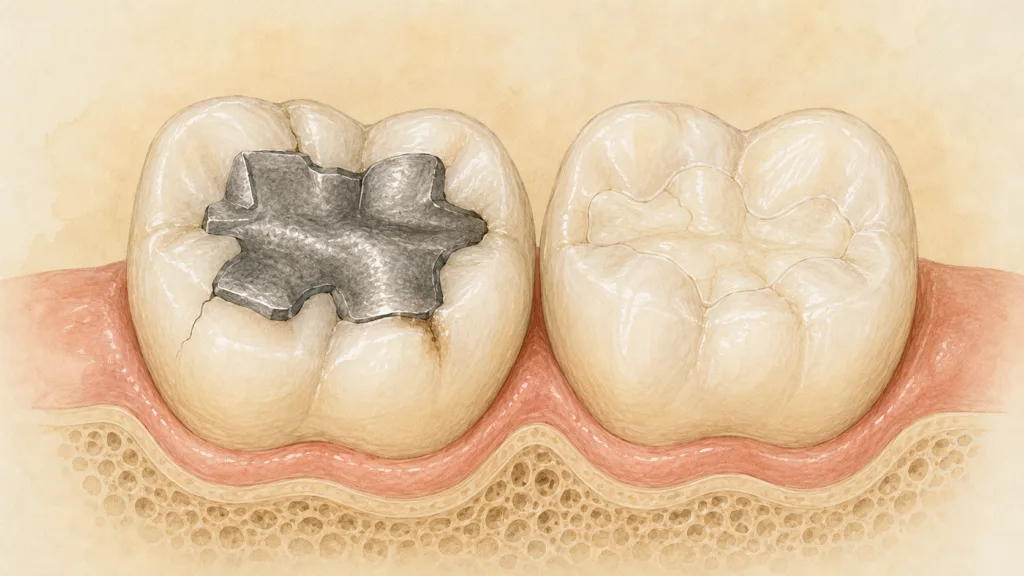
Amalgam was a widespread and durable filling material for a long time, but in today’s aesthetic and biologically minded dentistry it is increasingly considered outdated. Amalgam does not bond chemically to the tooth, so dentists often had to remove more healthy tooth structure for the filling to hold mechanically. Its metallic grey colour was also aesthetically unfavourable in visible areas. Over time, gaps, discolouration, or cracks could develop at the margins, increasing the risk of secondary decay. Today’s composite filling materials, by contrast, are tooth-coloured, highly shapeable, and bond to tooth tissue with special adhesive techniques. This means an aesthetic, durable result can be achieved while removing less healthy tooth structure.
The secret of a natural look: layering and shaping
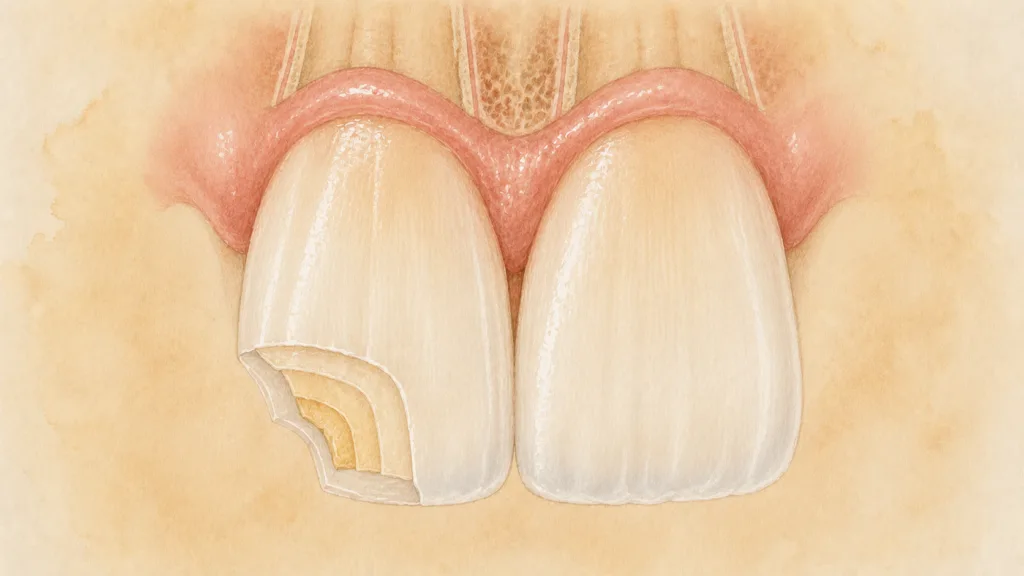
A natural tooth is not a single colour. The inner dentine is usually warmer and more yellowish, while the outer enamel layer is lighter and more translucent. That is why a truly beautiful aesthetic filling is not made from one material in one shade. The dentist builds layers of composite with different shades and translucencies. This restores the tooth’s natural depth, light transmission, and optical effect. At the end of treatment we carefully shape the filling, adjust it to the bite, then polish it so the surface is smooth, glossy, and easy to clean. The goal is for the filling not to stand apart from the tooth, but to blend seamlessly into the smile.
When is a filling enough, and when is a ceramic inlay better?
A composite filling is an excellent solution for small to medium tooth structure loss, when a significant part of the tooth crown is still intact and stable. For larger defects, a ceramic inlay made in the lab or with CAD/CAM technology can be a more durable option.
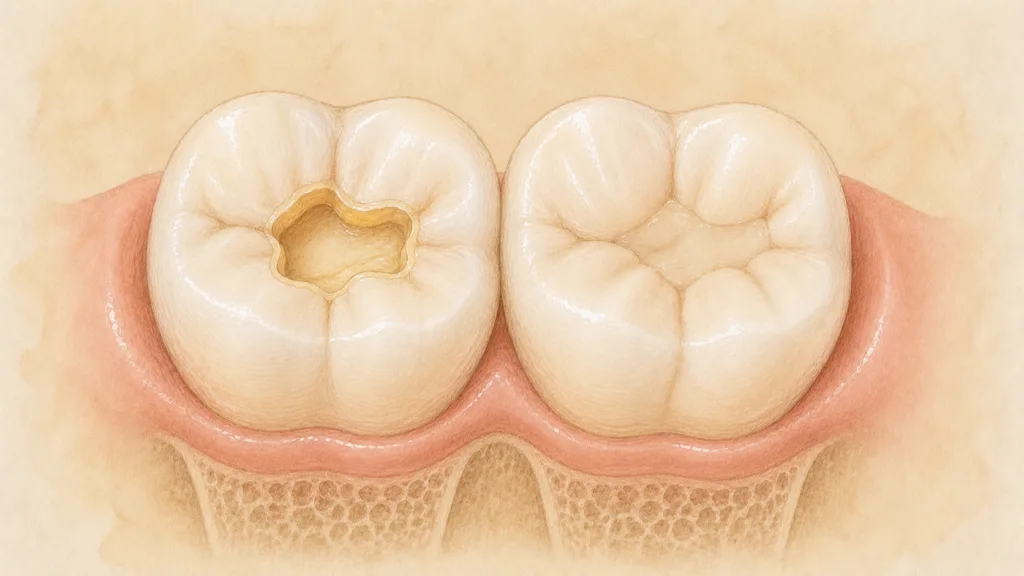
Composite filling
Ideal for small to medium tooth structure loss. Made directly in the mouth, tooth-coloured, highly shapeable, and bonded to tooth tissue with special adhesive – while removing less healthy structure.
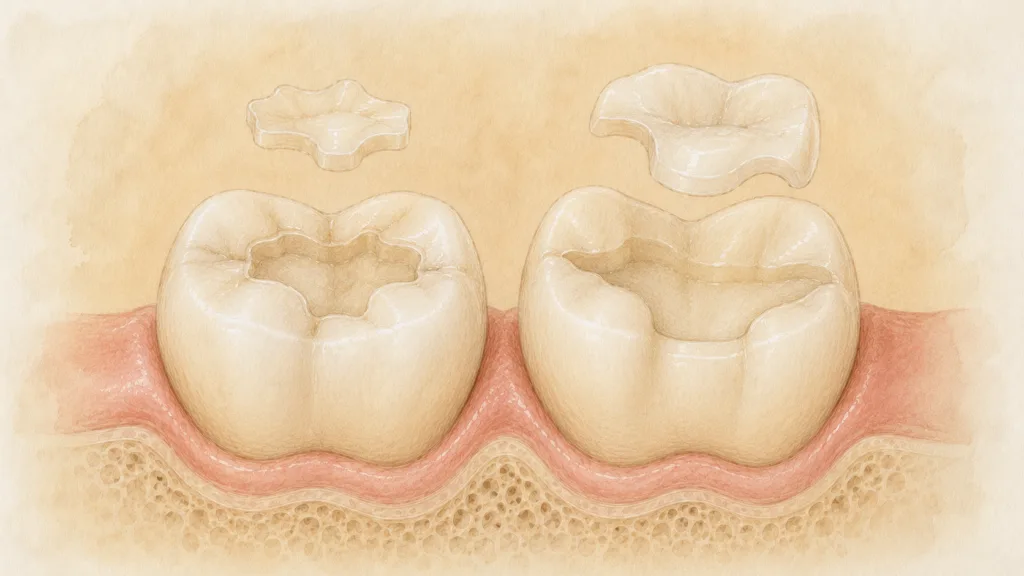
Ceramic inlay (inlay / onlay)
When a larger portion is missing, one or more cusps are weakened, or the chewing surface is extensively damaged. An inlay restores the space between the cusps; an onlay covers and reinforces one or more cusps as well. The golden middle between a filling and a crown: it can be more stable than a large composite filling while preserving more of your own tooth than a full crown.
What is an e.max ceramic inlay?
e.max is a ceramic system developed by Ivoclar, made from lithium disilicate glass-ceramic. In dentistry we often use it for aesthetic inlays, onlays, veneers, and crowns. Its popularity comes from being strong, precisely fitting, and exceptionally natural-looking at the same time.
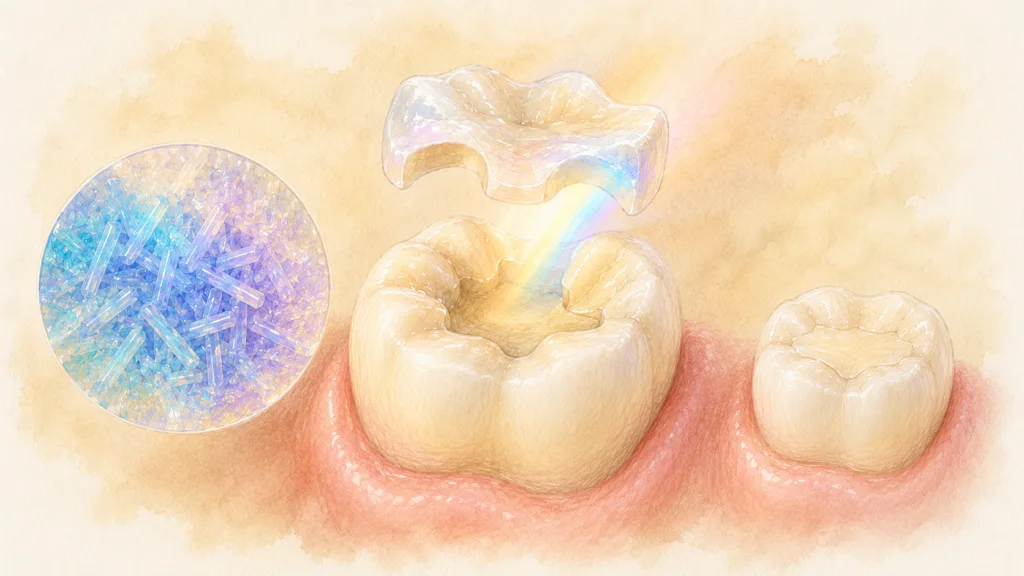
Key benefits of e.max
Strength, aesthetics, and precise craftsmanship in one system:
- High strength: Lithium disilicate ceramic withstands chewing forces well, making it especially advantageous for restoring larger tooth defects.
- Lifelike aesthetics: The ceramic’s light transmission is similar to natural enamel, so the inlay does not look like a foreign body. Its colour, translucency, and surface blend harmoniously with neighbouring teeth.
- Good colour stability: The polished and fired ceramic surface is more resistant to staining than resin-based filling materials.
- Precise laboratory or digital fabrication: While a composite filling is made directly in the mouth, a ceramic inlay is produced by a dental technician or a digital CAD/CAM system. This allows a very accurate form, fit, and anatomical surface.