


Orthodontics
- Digital diagnostics
- Gentle treatments
- Transparent treatment plan and pricing
A natural path to a confident smile
Our patients often assume that orthodontics is only possible in childhood and that its sole purpose is to improve appearance. In reality, however, there is no upper age limit for orthodontic treatment, and its goal goes far beyond a straight smile: functional balance – the coordinated work of the teeth and the jaw joint – and lasting long-term oral health.
Why a well-aligned bite matters beyond aesthetics
Crowded or misaligned teeth are not merely a cosmetic concern. They can be the source of many problems you might not think of at first:
- Harder to clean: Plaque builds up more easily between crowded teeth, which can lead to both tooth decay and gum inflammation.
- Jaw joint discomfort: When the teeth do not meet at the right points during chewing, it can strain the jaw joint (temporomandibular joint), causing recurring tooth and headaches, or even neck or shoulder pain.
- Tooth wear: For similar reasons, certain tooth surfaces can become overloaded, leading to premature enamel wear or chipping.
Types of braces: tailored to your lifestyle
We work with the latest technologies in our practice, so treatments are as fast and discreet as possible.
Invisible orthodontics
(Aligner technology)
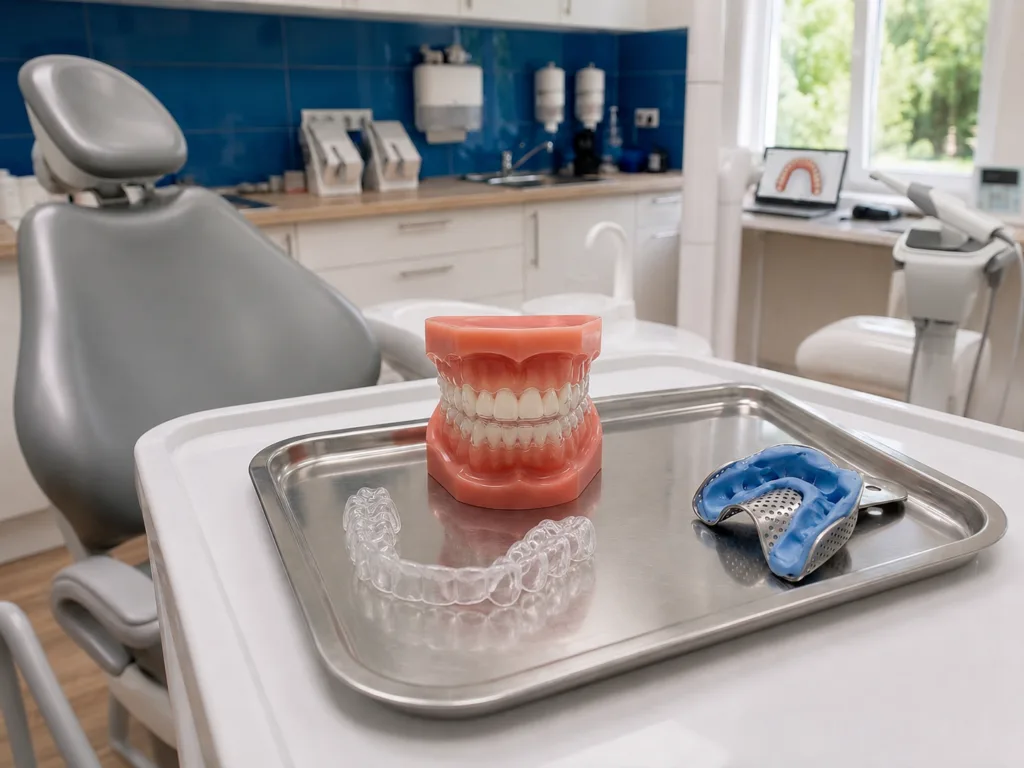
A popular choice among our adult patients, as a series of fully transparent aligners gently moves the teeth into the desired position. The method allows patients to remove the aligners for eating and brushing, making oral hygiene exceptionally easy – a major advantage of this type. If the patient can wear them for 20–22 hours a day, excellent results can be achieved.
Fixed braces
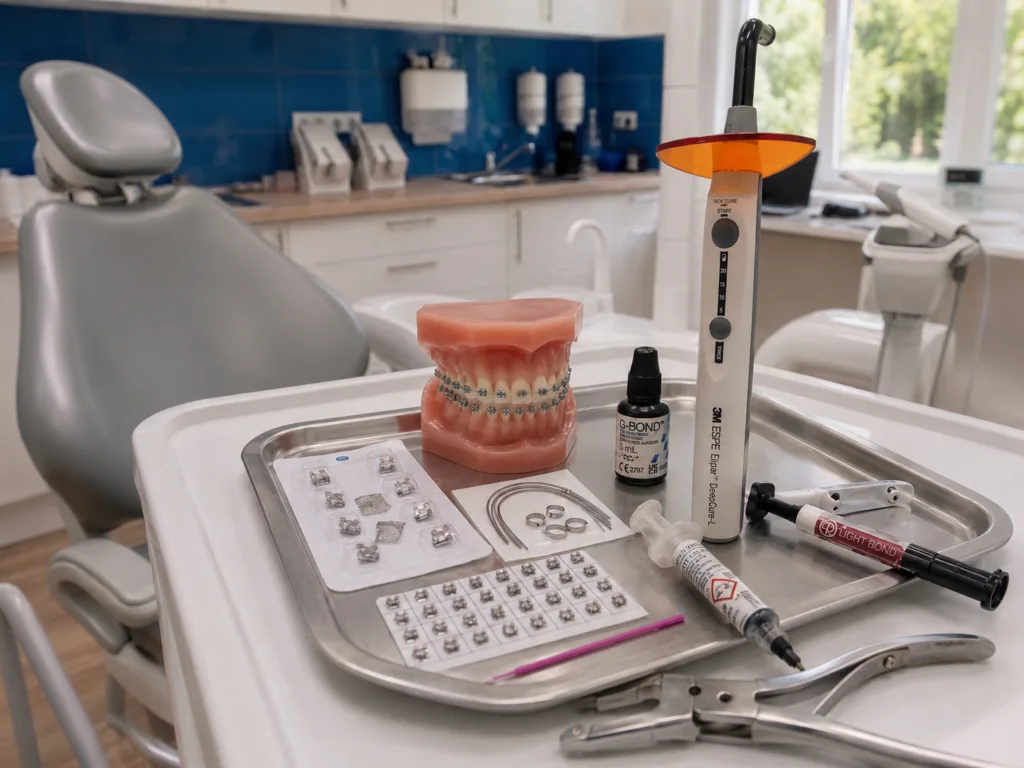
For more complex orthodontic cases, or when wearing aligners more than 20 hours a day feels too demanding, we choose fixed appliances. Of course, aesthetic options are still available: thanks to modern techniques, appliances no longer have metal-coloured parts unless the patient specifically wants that look.
How do we get started? Here are the steps
-
Consultation and diagnostics: As a first step, we carry out a thorough examination (cephalometric X-ray, panoramic X-ray, dental CT if needed, photos, and digital or traditional impressions). It is very important that the orthodontist’s planning and success depend greatly on colleagues’ assessments and on establishing good oral hygiene with the help of dental hygienists. It may sometimes feel as if endless, seemingly unnecessary steps take place before the treatment plan is ready, but the combined expertise of a dental team is essential in every case.
-
Personalised treatment plan: After the planning process, our specialist explains the options, expected duration, and costs in detail.
-
Treatment: After the appliance is fitted or the aligners are handed over, regular check-ups or activation appointments follow, where the “magic” continues step by step.
-
Retention (holding the result): This stage is almost as important as the treatment itself, as it ensures our work lasts long term. In every case we use both fixed and removable retainers so the teeth stay in their new, correct positions for a lifetime.