


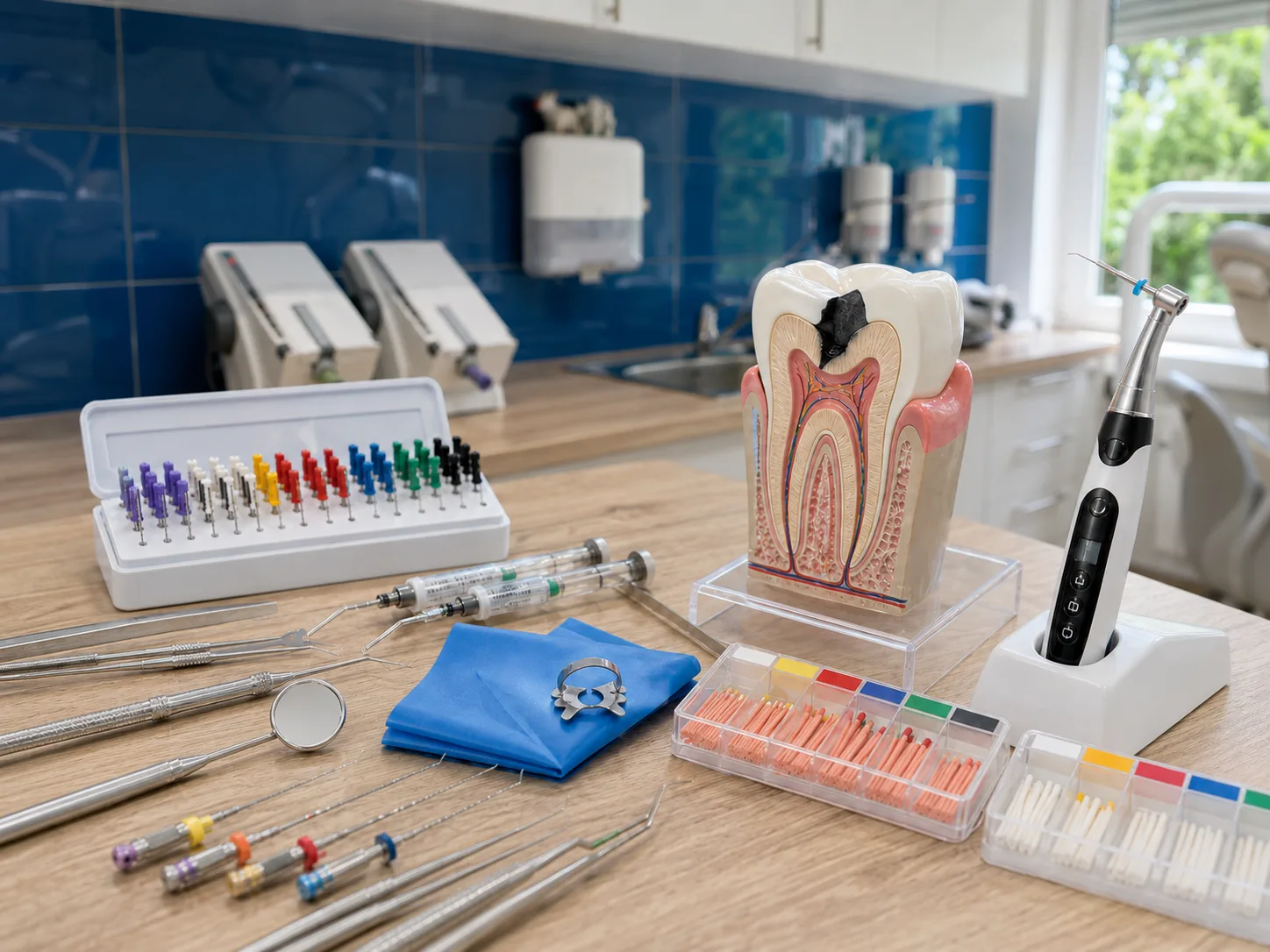
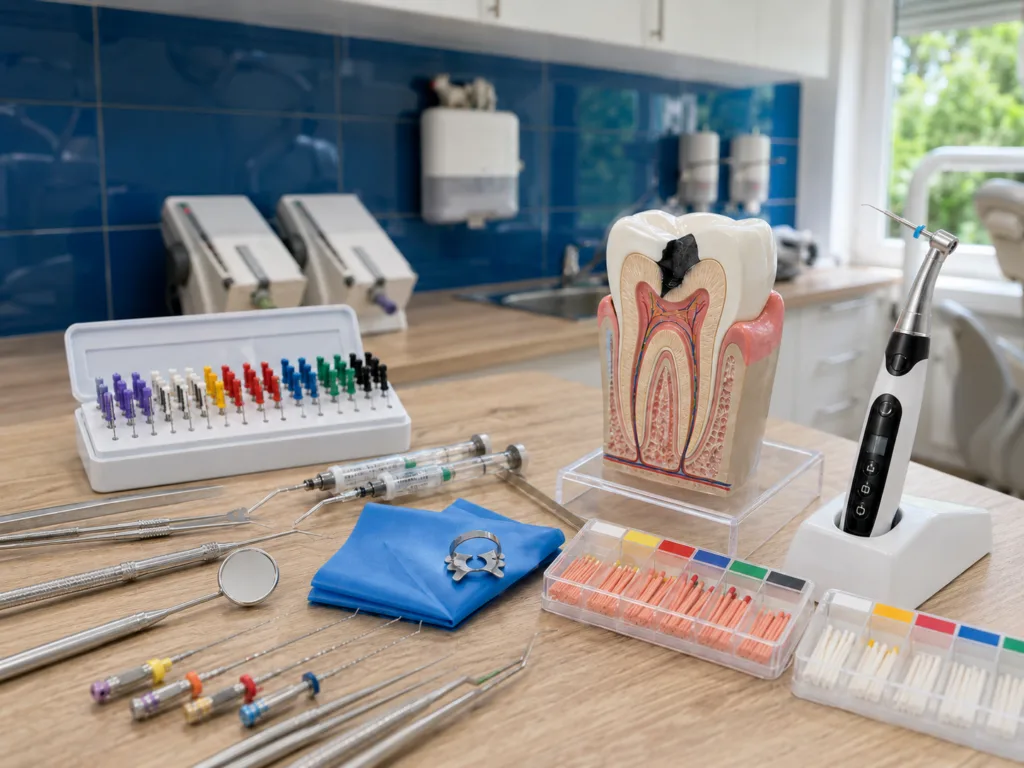
Root Canal Treatment
- Pain-free procedure
- Preserving your natural tooth
- Rubber dam technique
One last chance to save your natural tooth
Many people flinch at the mention of root canal treatment, yet thanks to modern technology this procedure is now completely pain-free, and one of the most effective ways to avoid extraction.
When is root canal treatment needed?
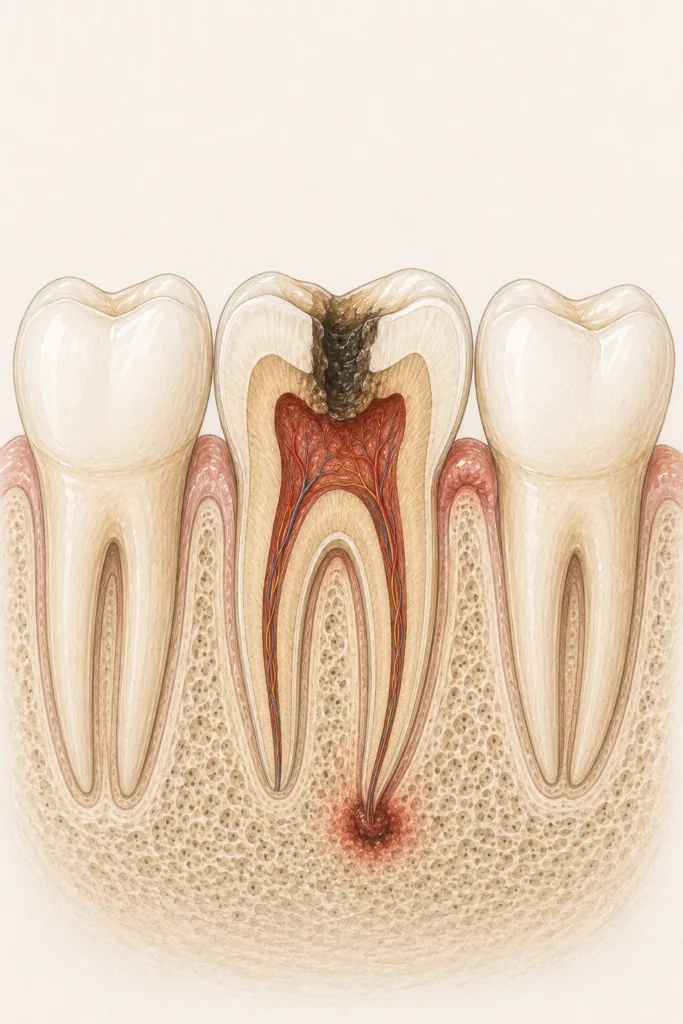
Inside our teeth lie blood vessels and nerves (the pulp). Deep decay or a blow to the tooth can cause this nerve to become inflamed, or eventually die. This is often signalled by throbbing pain, pain on biting, sensitivity to hot and cold, or gum swelling.
What happens during treatment?
-
Anaesthesia: The very first step is perfect local anaesthetic. You will feel nothing during the procedure.
-
Cleaning: Using specialised precision instruments, we remove infected tissue and pathogenic bacteria.
-
Sealing: The cleaned canals are hermetically sealed with a special filling material to prevent reinfection.
-
Restoration: Because root-treated teeth are more fragile, we recommend an inlay/onlay or a crown for long-term durability, as these best protect the tooth cusps from fractures.
Why is the rubber dam important?
One key to successful modern root fillings is a dry working field. The rubber dam is a thin sheet of rubber that isolates the tooth being treated from the rest of the mouth. This provides a cleaner, drier and more controlled environment for the root filling. Using a rubber dam not only ensures the sterility of the root filling, but can also be more comfortable for the patient: less water, debris and material enter the mouth, while the dentist can work more precisely and safely.

Why is it worth it?
Root canal treatment does not cause pain — it eliminates it. With a successful treatment, the tooth can serve you faithfully for decades to come!
- Preserving your natural tooth: Nothing can replace your own tooth.
- Stops the inflammation: Treatment prevents the infection from spreading to further tissues.